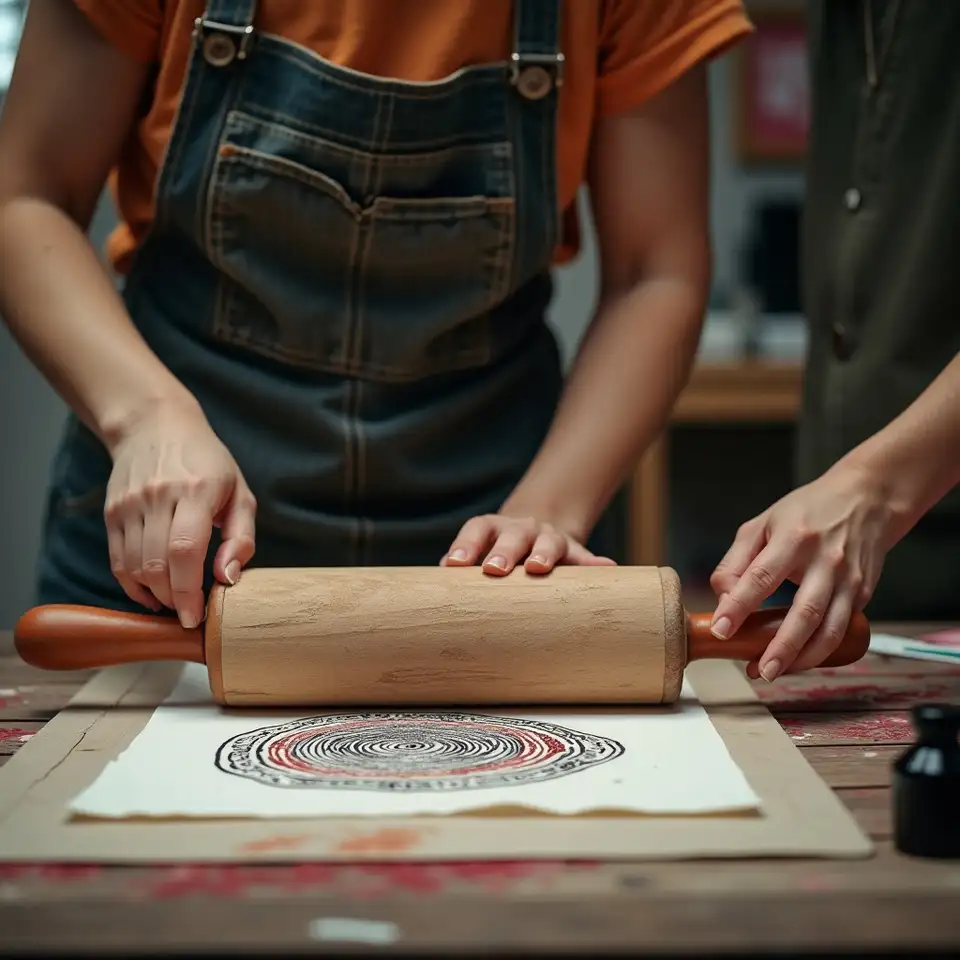
Improvement in printmaking emerges from observing outcomes, not from investing in new equipment.
Ella Mason
Workshop Facilitator
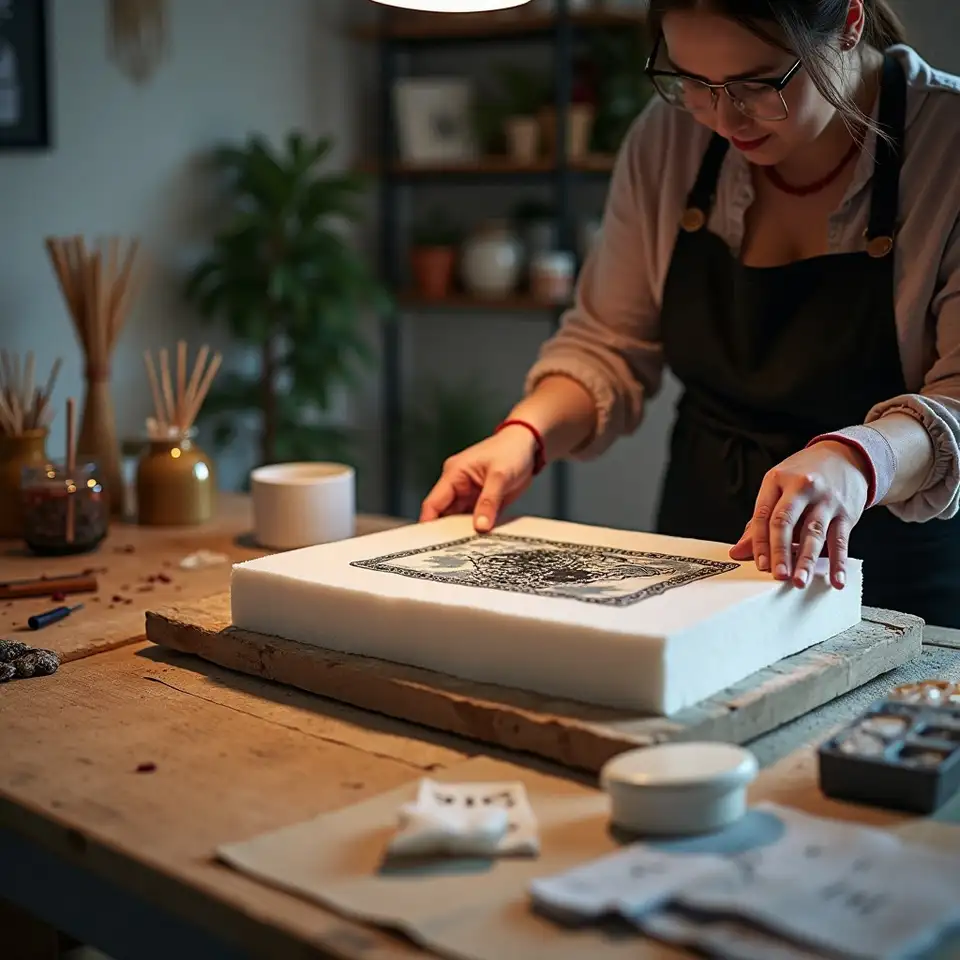
Improvement in printmaking emerges from observing outcomes, not from investing in new equipment.
Anecdotal evidence reveals that kitchen utensils and packaging can form the core of effective printing tools. For instance, one beginner reports using a simple rolling pin to transfer ink with consistent pressure, achieving results similar to professional presses.
Focusing on direct observation and patience, each technique becomes less about decoration and more about understanding cause and effect. Early attempts using foam trays and water-based ink reveal the importance of surface texture.
Instruction Prioritizes Reliable Techniques and Consistent Improvement
Basic printmaking strips the process down to its essentials—materials found at home, steady steps, and gradual refinement.
Observation is central. Noting how different papers absorb ink or how minor changes in hand pressure affect outcomes provides a foundation for improvement over time.
Conventional thinking suggests advanced tools are necessary for printmaking. Instead, the basics rely on common household objects and precise technique. Each method explained here focuses on results produced through straightforward steps.
Using items like rolling pins, leaves, and cardboard, homemade printmaking becomes accessible to anyone willing to follow instructions.


Homemade printmaking emphasizes observation, patience, and practical results over flair. Each tool and process is selected for clarity, not tradition.
Instead of purchasing specialty rollers, one example involves using a water bottle as a brayer substitute. This approach yields adequate ink transfer for early experiments and underscores the value of resourcefulness.
Household printmaking is less about immediate visual impact and more about understanding how each material interacts. Observation of outcomes, note-taking, and incremental adjustments lead to steady improvement.
Simple Materials, Careful Measurement, and Repeatable Results
Homemade printmaking stands on accessible techniques, not expensive equipment. Each approach uses easily found items, clear steps, and practical demonstrations. Observation, measurement, and repetition are prioritized before decoration. Results come from patience, not shortcuts.
Household objects, such as plastic containers or baking tools, replace costly presses. These substitutions create distinctive textures and patterns, enabling experimentation without specialized purchases.
Step-by-step guidance ensures methods remain simple. Each process—whether carving, stamping, or rolling—relies on clear instructions and tangible results, avoiding confusion from unnecessary complexity.
Early printmaking projects use cardboard, foam trays, and water-based inks. Observing how ink interacts with each surface forms the basis for learning, supporting repeatable outcomes with minimal waste.
First attempts rarely match expectations. Instead of focusing on flawless prints, this approach values process over perfection. Consistency grows through deliberate trial and incremental adjustment.
Simplicity remains central in every approach, using accessible materials and direct processes for clear, practical outcomes every time.
Consistency in steps, measurement, and observation guides improvement, turning mistakes into learning moments for reliable results.
Resourcefulness is valued over acquisition. Everyday objects become tools, emphasizing adaptability and careful repurposing throughout each step.
Patience underlies all progress, with steady repetition and incremental changes forming the basis for growth in homemade printmaking.
This site uses cookies to support functionality, analyze usage, and improve the printmaking experience. You can accept or reject non-essential cookies at any time using the controls below. For full details, see our updated cookie policy.
Essential cookies are necessary for core website functionality such as navigation, form submissions, and session management. These cannot be turned off in our system.
Analytical cookies collect anonymized data on site usage to help improve navigation and performance. These are not required for basic operation and are optional.